
April 1st: The end of the Airbnb Free-For-All
I'm Excited!

— Hey guys, quick plug before we start:
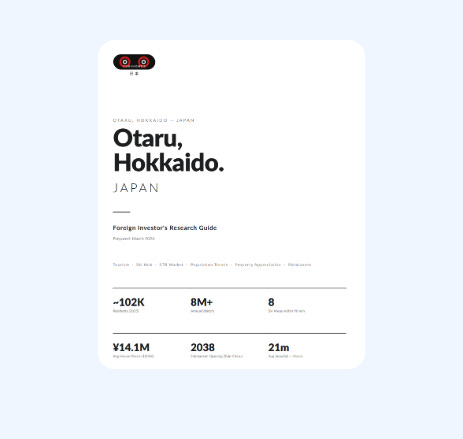
_First, something serious: OurOtaru Investment Guide. We spent half a year on it, it’s packed with data and everything you need if you’re considering buying in Otaru. _
Second, something silly:The YukiHomes Beanie. If you want to look as dumb as me, hit the preorder link, shipping Summer 2026, only making 50 because we are not sure how many people actually want them, so they will be limited. —

If you guys haven’t been paying attention, today April 1st, which is the start of the new fiscal year in Japan, the Japanese government is stepping up enforcement. They’ve been increasing automated monitoring (likely data matching across platforms, not literally “AI scanning listings,” but similar idea) to flag properties listed without a license.
In Japan, to legally run an Airbnb, either as a Minpaku or Ryokan, you need a license. This crackdown is really focused on Minpaku offenders. To get that license, you have to go through checks with your local government.
Depending on whether it’s Minpaku or Ryokan, there are various code upgrades you need to complete. At the end, you get a final inspection, and then you get your license.
That’s obviously a shortened version of what really happens, it’s actually quite slow and bureaucratic, but it also makes sure these homes are up to a certain standard, and there’s a meaningful barrier to people buying up cheap homes and listing them en masse.
But there have been people illegally buying homes and listing them , not en masse, but enough to matter. When Japan first enforced Minpaku regulations back in 2018, there was a massive crackdown. Airbnb listings actually dropped by roughly 70–80% overnight when the law went into effect because so many were non-compliant.
Some listings have slipped through the cracks since then. So this is where these newer enforcement efforts come in. And it’s not just about illegal listings, it’s also about legal ones making sure they don’t exceed the 180-day annual cap under Minpaku rules.
And these are increasingly automated checks to make sure people are following the rules.
Which is awesome. We go above and beyond to do things the right and legal way, and it’s nice to see people who are skirting the system will actually face consequences. And the consequences aren’t light — operators can face fines up to ¥1 million (~$6,500 USD) under the Minpaku law. In more serious cases (like fraud or immigration violations), yes, visas can be affected, but it’s not automatic, it depends on the situation.
To all the people out there illegally running Airbnbs in Japan, your time is up.
Now, the other positive news is that some local governments are actually trying to streamline and speed up licensing. Because they’re aware of the bigger issue: rural depopulation. These towns are shrinking, homes are sitting vacant, becoming hazards, and local businesses are closing. Japan has over 8 million vacant homes (akiya) , this is a real problem.
Does turning your town into a resort town solve everything? Of course not. But it can help. And the way Japan is approaching this is actually pretty solid.
Crack down on people breaking the rules, but make it easier and more consistent for people who are following them.
Seems like a no-brainer in so many situations that plague our world lol, but governments don’t always act logically.
Hey… but here they are. And it’s awesome to see.
Browse opportunities yourself: Check out current listings at Nipponhomes.com
Book Consultation | Subscribe to our newsletter
We’ve been building out a solid list of travel + ski partnerships lately.
If you’re gearing up for a trip and need things like luggage, Goggles, insurance and much much more there are some really good deals below.
We’re always looking to partner with great travel + ski brands.
If you’d like to be featured on our perks page, reach out at: Grant@yukihomes.com
This content is for informational and educational purposes only and reflects my personal opinions and experience. I am not a licensed financial advisor, tax advisor, or attorney. Readers should conduct their own due diligence and consult qualified professionals before making any investment decisions.
Subscribe