
These Are the Most Powerful Tools for Home Buyers in Japan
And thought's about the looming Japanese depopulation crisis.
— Hey guys, quick plug before we start:
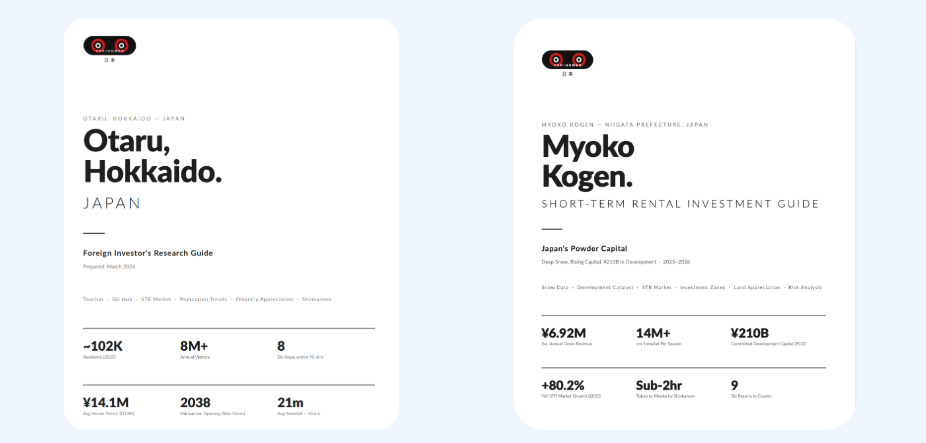
First, something serious: OurOtaru Investment Guide & Myoko Investment Guide. We spent half a year on these, they are packed with data and everything you need if you’re considering buying a ski home, in my two favorite towns.
Second, something silly:The YukiHomes Beanie. If you want to look as dumb as me, hit the preorder link, shipping Summer 2026, only making 50 because we are not sure how many people actually want them, so they will be limited. —
We’ve been hard at work redesigning Nippon’s UX and adding features that help users make more informed decisions.
Since my last post about Nippon we’ve added several new layers which I’ll list below.
-
Depopulation risk
-
Flood risk
-
Supermarkets
-
Winter layer for skiing
-
Monthly utility, taxes, home owners, wi-fi estimates
-
Airbnb nightly rate and occupancy rate estimates
I’m going to dive into how I use each one, how they make me a better investor in Japan.
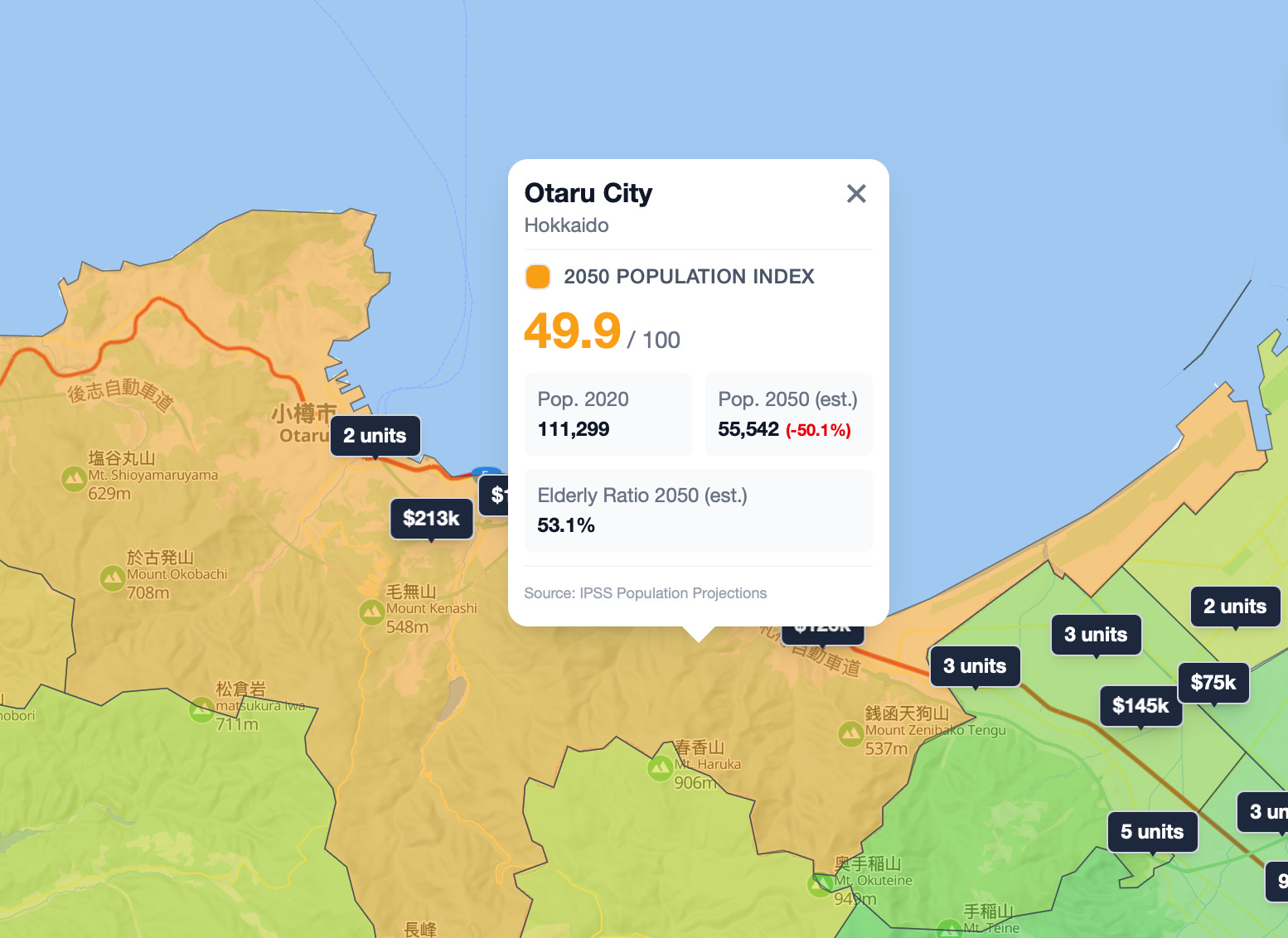
The depopulation risk layer is a feature we added to help you quickly see which cities have the highest risk of population decline.
If you’re a regular reader, follow our Instagram, or are generally familiar with Japan, it won’t surprise you that a huge number of towns across Japan are at real risk of depopulation.
Outside of the major cities, a lot of Japan is projected to see steep population declines over the next 20 to 30 years. Some rural areas are expected to lose 30, 40, even 50 percent of their population.
That is obviously something you should understand if you are thinking about buying property here.
So what does that mean if you’re trying to invest in Japan?
The first thing I tell every single person I speak to is that in Japan the default assumption should be that your home will not gain value. In many cases the building itself is depreciating from the day it is built.
That sounds scary to people coming from the United States, Canada, or Europe where the cultural expectation is that your home is your biggest financial asset.
Japan just works differently.
The land can hold value. The building usually does not.
But there are some important caveats.
I’ve talked about this before when discussing ski town real estate. Certain locations break the normal rules. Ski towns that attract international tourism and foreign investment have seen very real price increases over the past decade.
Places like Niseko are the obvious example, but we’re starting to see similar patterns in other powder regions.
What’s interesting about these markets is that they are largely driven by foreign demand. That means they are somewhat insulated from the population decline numbers you see when looking purely at domestic demographics.
So when you overlay something like depopulation data with tourism demand, infrastructure, and international interest, you start to get a much clearer picture of where opportunities might exist.
That’s exactly why we built the depopulation layer. It’s not there to scare people. It’s there to give context.
It helps you quickly see which areas are facing stronger demographic headwinds and which ones are more resilient.
At the same time it reinforces something I believe strongly. We actually need to invest in these communities.
These are places I’ve grown to love. Places that genuinely feel like home to me.
Otaru is the biggest example.
But there are dozens of towns across Japan with incredible culture, food, mountains, and community that are slowly shrinking every year.
And when population declines, it’s not just numbers on a chart.
It affects the restaurants, the bars, the barbers, the coffee shops, the hardware stores. All the small local businesses that make these towns feel alive.
I understand the argument that what these towns really need are more full time jobs and industries that attract young people.
And that is absolutely true.
But I also think what we are doing helps in its own way.
People who buy homes in these places don’t just visit once. They start spending real time there.
They start by coming in winter, but they slowly start coming in spring, summer, and fall. They stay longer. They bring friends. They eat at local restaurants. They get haircuts. They shop locally.
It increases the amount of economic activity happening in these towns.
Is what we’re doing the perfect solution to Japan’s population challenges? Of course not.
But it is a meaningful step that I do think helps these communities.
For example I just spent about 60 days in Otaru.
I’ll be back again in September for another four weeks, and then back again in January likely for another 60 days.
When you own a home somewhere, your relationship with that place changes. It stops being a vacation destination and starts becoming part of your life.
You start to feel attached to these places and want them to thrive.
And all of a sudden you start volunteering at local community events, opening businesses (stay tuned for our coffee shop/bar coming in Otaru), bringing neighbors gifts.
That’s what we're hoping to increase.
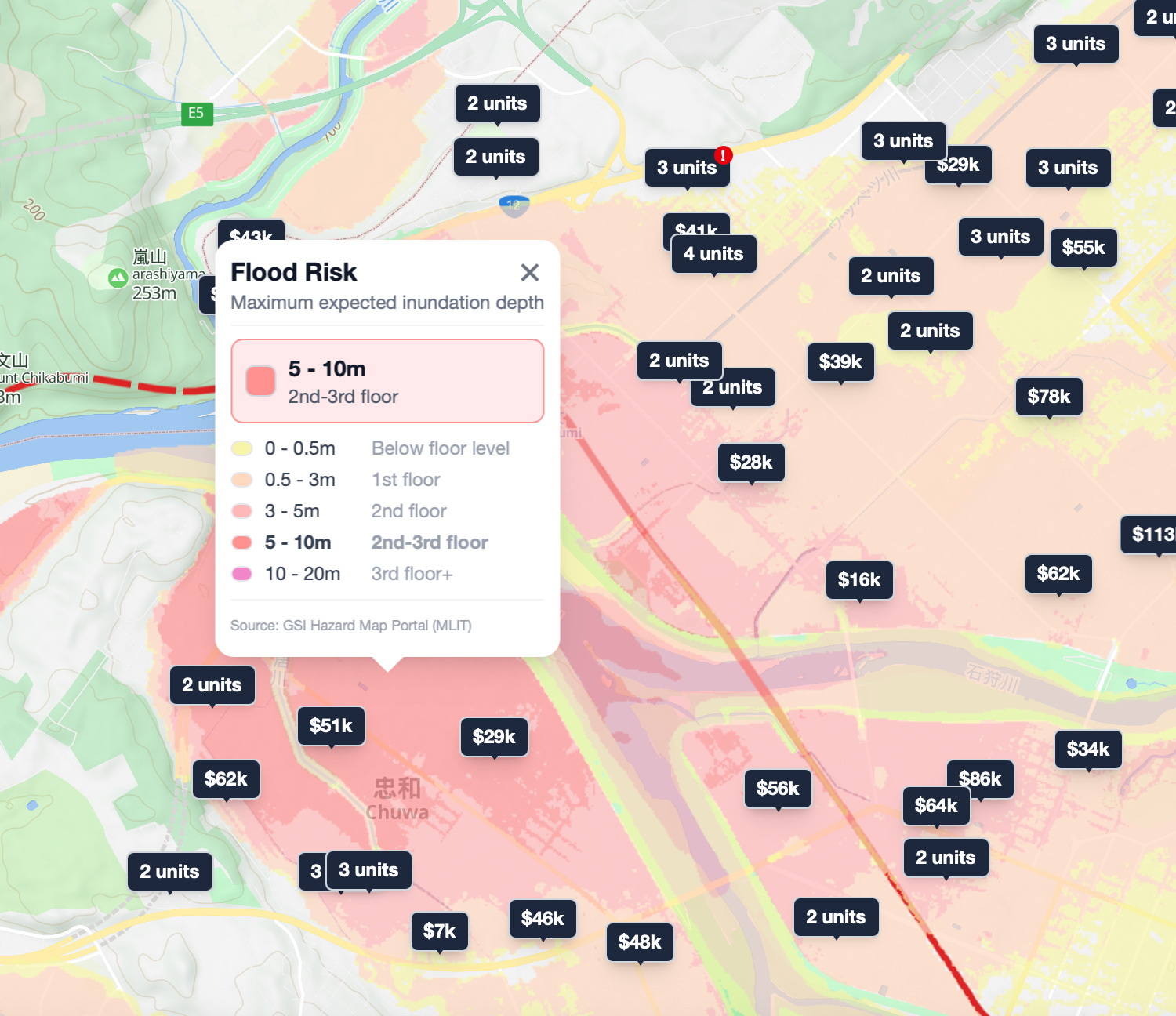
The flood risk layer is another important feature.
Most people buy homes in areas they are very familiar with. They’ve often lived there for years and already know which areas flood, which neighborhoods sit lower, and which areas are safe.
That obviously is not the case when you are buying a home on the other side of the world.
Japan actually has extremely detailed flood and hazard mapping, but it’s not always easy for foreigners to access or interpret.
So we integrated that data directly into the map.
Now when you are browsing properties you can quickly understand the flood risk of the surrounding area and factor that into your decision.
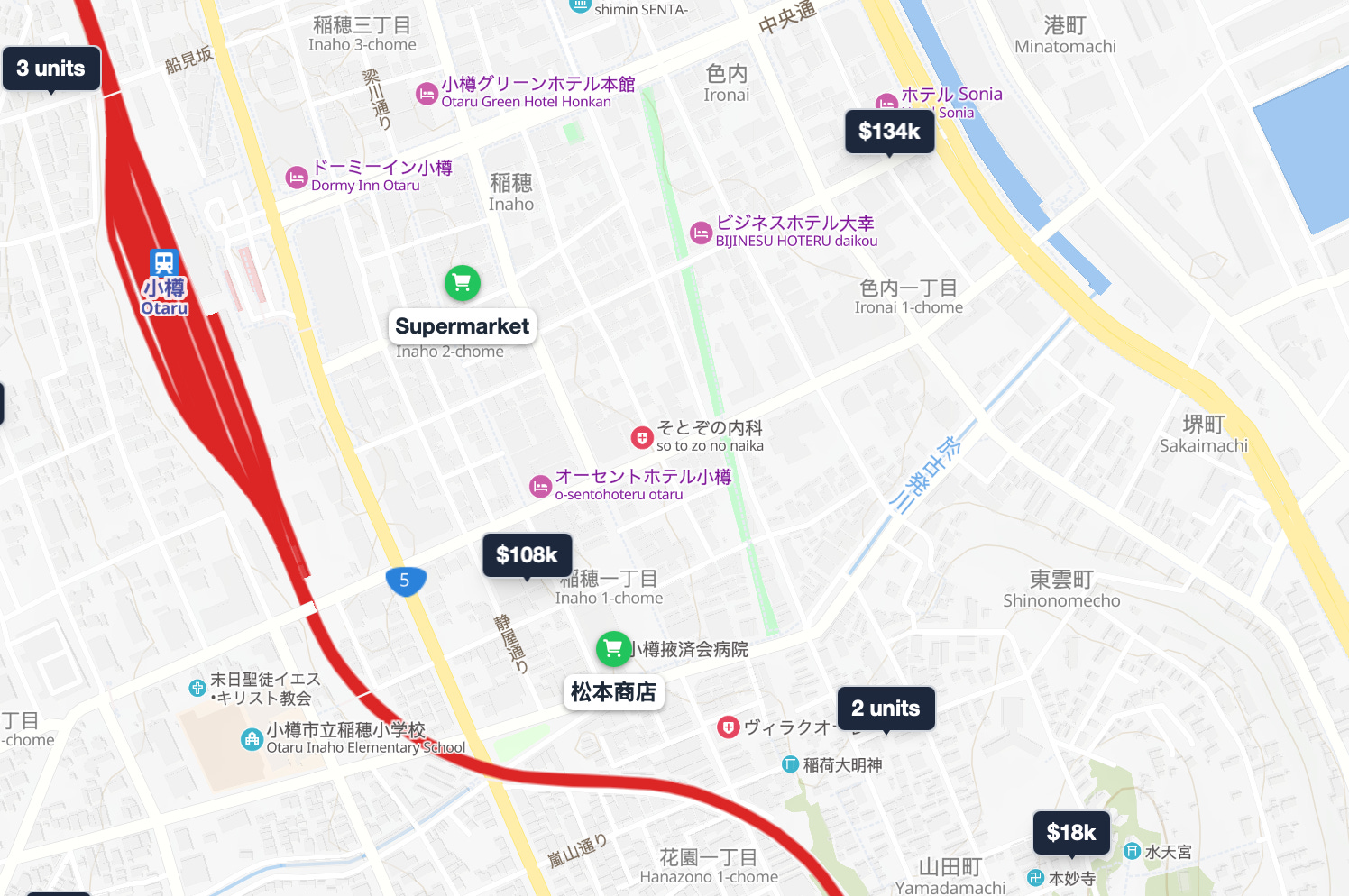
The supermarket layer is a smaller feature but it’s one that actually matters a lot when you start spending real time in a place.
Yes konbinis are amazing.
I go to one every single day when I’m in Japan. No joke.
But when you’re staying somewhere for more than two or three weeks you’re going to be cooking meals.
You’re going to want a proper grocery store nearby.
So now you can quickly see how close the nearest supermarket is to any property you’re looking at.
It sounds simple, but these little details are the kinds of things that actually shape your day to day experience living somewhere.
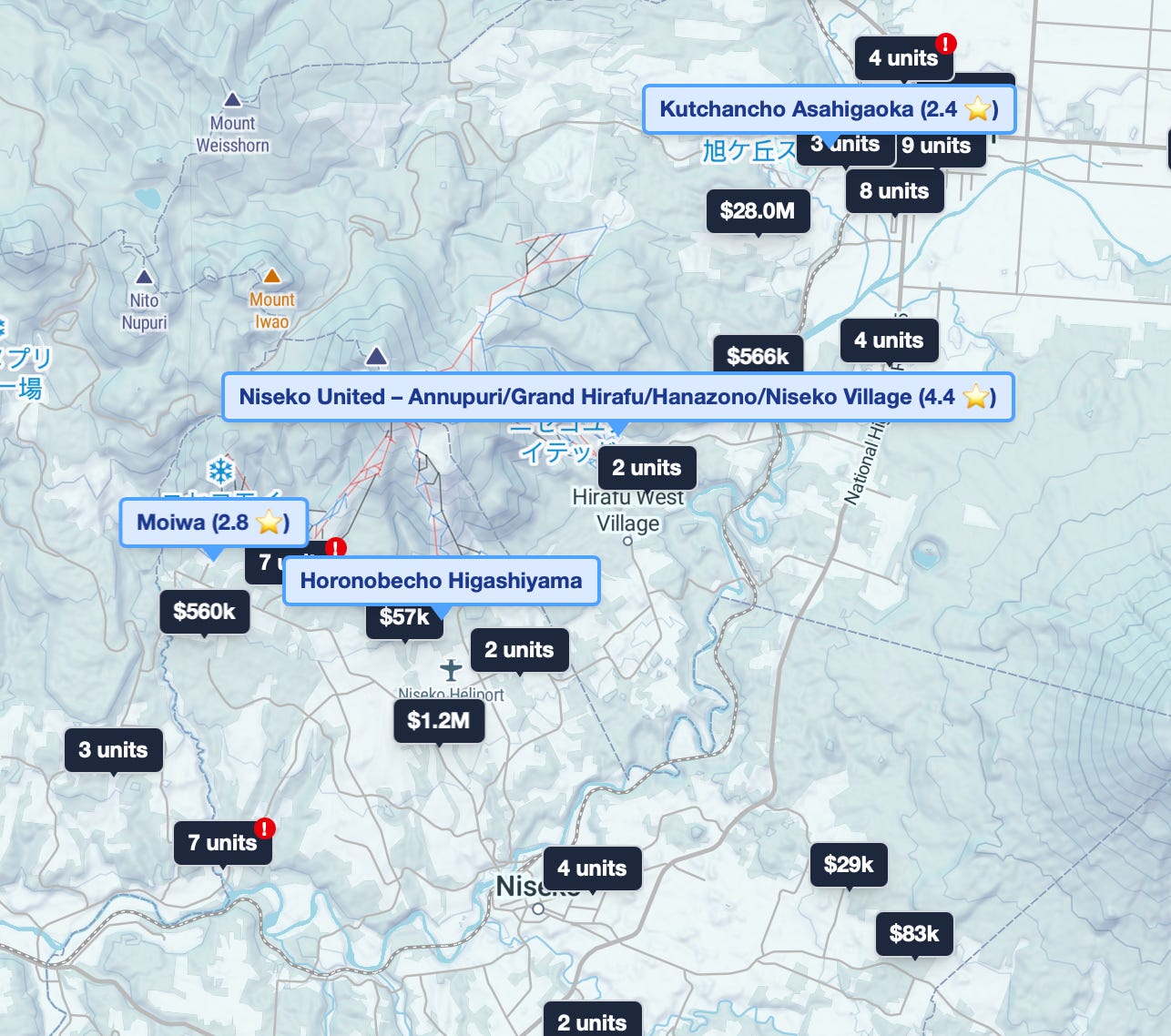
And lastly the ski filter.
We’re skiers. Our readers are skiers. A huge percentage of our Instagram followers are skiers.
So we built a layer that lets you instantly see how close a property is to nearby ski resorts.
Japan has an incredible number of ski areas scattered across the country. When I was searching for homes for clients in unfamiliar ski regions, I constantly found myself opening Google, searching for resorts, checking distances, and piecing everything together manually.
So we decided to just build that directly into the platform.
Now you can toggle the winter layer and immediately see the surrounding ski resorts and understand how close you are to the lifts.
If you’re someone looking to buy a ski house, that context matters a lot.
And it’s already become one of the most used layers on the site.
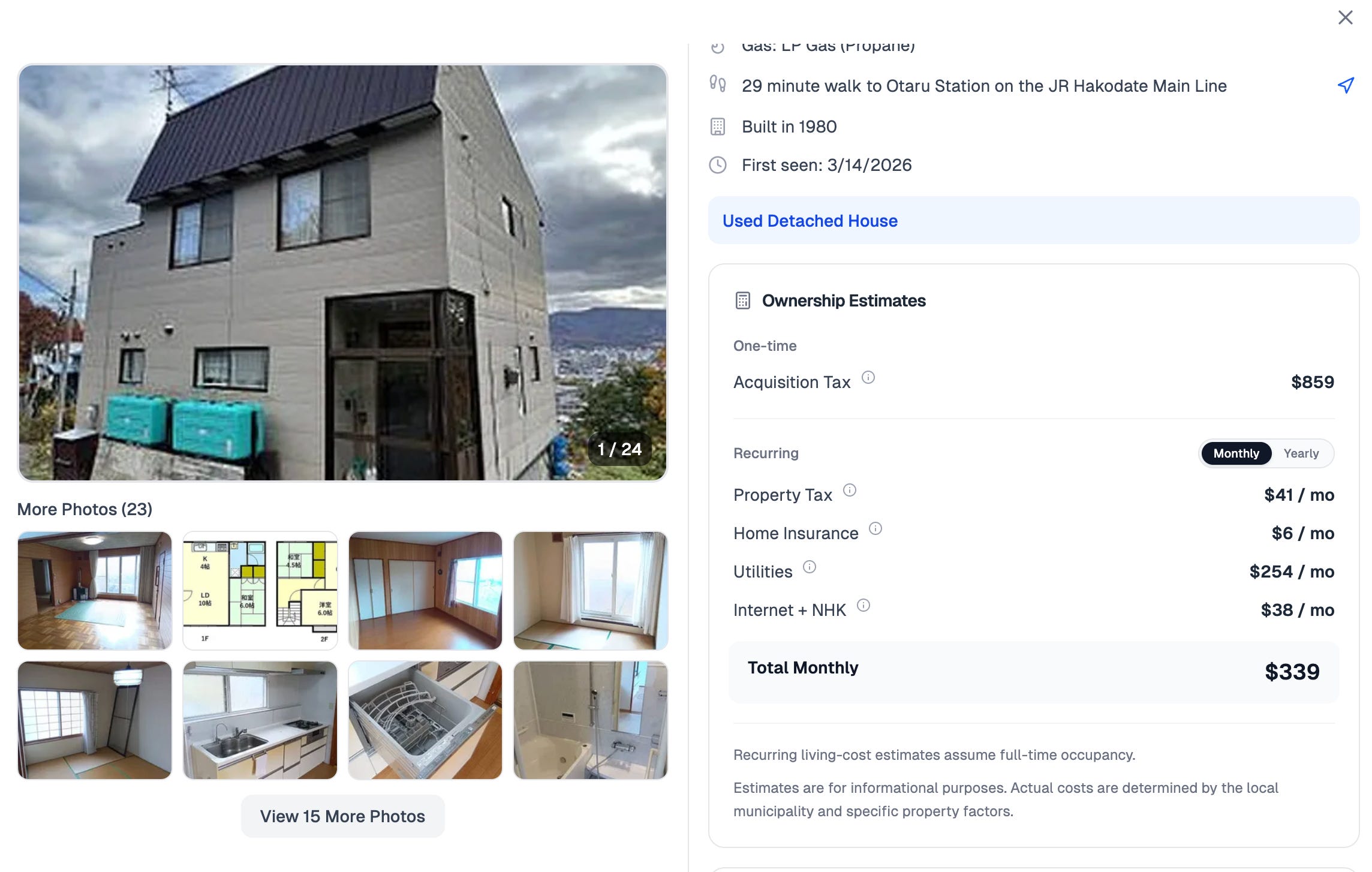
All our clients are foreigners, and all you guys reading this are foreigners too. You probably have zero clue what utilities, property taxes, and homeowners insurance cost in Japan.
I definitely didn’t when I bought my house.
And because homes in Japan can be so cheap, everyone assumes, okay, taxes must be where they get you. But nope, those are usually pretty cheap too.
So we built this estimator straight into NipponHomes. Now you can get a rough idea of what your monthly holding costs might look like for a house in Japan. It’s important to note that these are just estimates. The goal is to give you a clearer picture of what the costs are like.
The utility costs assume you’re living in the house full-time, for the entire month or year. Of course, if you only visit for a month or two weeks out of the year, your actual bill will probably be dramatically lower.
And the formula we use for taxes is not foolproof. We simply take 70% of the purchase price and multiply it by the yearly tax rate of 1.7%. Property taxes in Japan are based on the assessed value of the home, which we do not have access to.
But from our experience, 70% of listing price is a pretty solid ballpark.
Just remember, this is all meant to help you get a clearer picture of what owning a home in Japan is actually like.
It’s not 100% accurate. The way you use your house, and the way the average Japanese person uses theirs, may be very different, and that will affect the numbers.
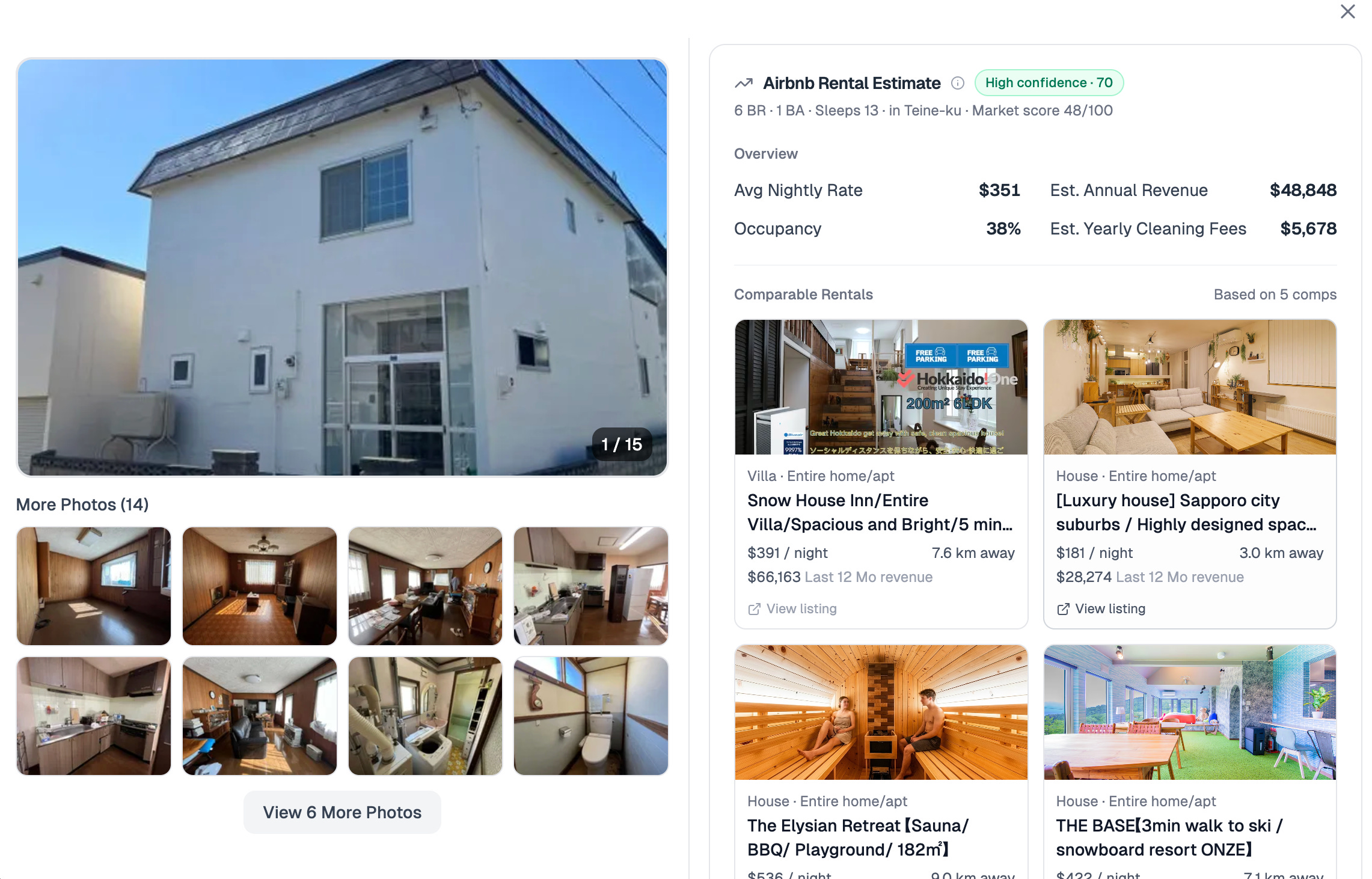
And finally, the Airbnb tool. You can calculate the projected nightly rate and occupancy rate for basically any home in Japan, which is an awesome feature.
It gives you comps near the listing, estimated yearly cleaning fees, and even a confidence level for the projection.
All of this data comes from AirDNA, which is the tool I use for clients every day.
Again, this is just another tool to give you a rough idea. It’s not foolproof. Sometimes there just is not enough good data nearby to make a great comparison. Other times, it might overestimate the importance of things like bedroom count, even if the house itself looks rough.
This should not be the final piece of data you base your whole decision on. You still need to dig deeper, and that is something I do for clients every day. But it will give you a solid ballpark and help you quickly understand, okay, this seems like a decent area with decent numbers.
It’s a really good starting point, not the final answer.
These kinds of tools are the direction we’re continuing to push Nippon.
The goal is simple. Make it easier for people around the world to understand Japan’s property market and make smarter decisions when buying here.
So those are some of the newest features we’ve added. And there are plenty more coming.
Browse opportunities yourself: Check out current listings at Nipponhomes.com
Book Consultation | Subscribe to our newsletter
We’ve been building out a solid list of travel + ski partnerships lately.
If you’re gearing up for a trip and need things like luggage, Goggles, insurance and much much more there are some really good deals below.
We’re always looking to partner with great travel + ski brands.
If you’d like to be featured on our perks page or partner with us, reach out here:
This content is for informational and educational purposes only and reflects my personal opinions and experience. I am not a licensed financial advisor, tax advisor, or attorney. Readers should conduct their own due diligence and consult qualified professionals before making any investment decisions.
Subscribe